The Current State of Survival for African Last Mile" Logistics Startups

Apr 6, 2025 By Benjamin Evans

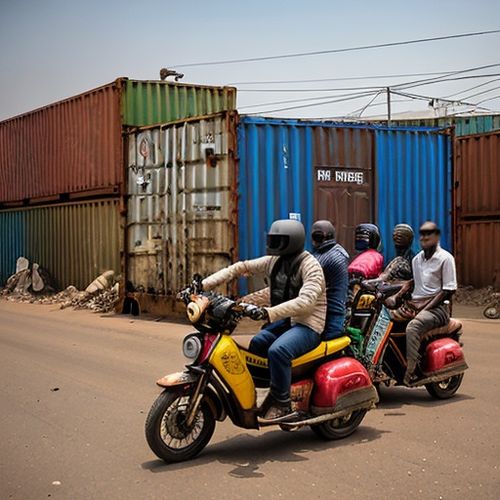
The dusty roads of Lagos hum with the constant buzz of okada motorcycles weaving through traffic, their riders balancing improbable stacks of packages. In Nairobi's industrial areas, converted shipping containers serve as makeshift warehouses where young logistics coordinators shout into two phones simultaneously. Across Africa's rapidly urbanizing landscapes, a new generation of last-mile delivery startups is rewriting the rules of commerce - when they aren't battling to stay alive themselves.


These companies operate in the continent's most punishing entrepreneurial crucible. Where Silicon Valley firms obsess over "scale" and "disruption," African logistics founders measure success in centimeters of unpaved road navigated and minutes shaved off delivery times that would give Western executives nightmares. The very definition of "last mile" transforms here - it might mean a 37-kilometer stretch of potholed highway to a rural clinic one day, then a vertical climb up 15 flights of stairs in a Lagos high-rise the next where elevators haven't worked since the 1990s.


The Address Problem That Isn't


Most global logistics tech assumes something fundamental: that destinations have addresses. "In our first month," recounts the founder of a Dakar-based delivery platform, "we lost 47% of packages because drivers couldn't find customers describing locations as 'the blue house near where the white goat used to be.'" Startups have responded with solutions ranging from GPS pins dropped via USSD codes to partnerships with local shop owners who serve as human geolocation beacons. One Accra company even trained drivers in basic forensic anthropology - recognizing family lineages through compound architecture styles.


These adaptations come at a cost. The most successful last-mile operators spend up to 60% of their engineering resources on solutions Western counterparts would never contemplate. A Kinshasa startup's entire mapping division focuses exclusively on tracking which alleys become impassable during rainy seasons. "Google Maps shows a road," its CTO shrugs. "We show what kind of motorcycle can pass it on Tuesday afternoons when the market overflows."


The Cash That Never Flows


Perhaps no single issue strangles growth like cash-on-delivery (COD) systems. While mature markets moved beyond COD decades ago, over 89% of African e-commerce transactions still rely on it. The consequences create a financial vortex: delivery agents become mobile banks handling more cash than some rural branches, startups hemorrhage capital floating 14-45 day payment cycles, and theft rates would make traditional insurers faint.


Lagos-based Kwik Logistics developed an entire shadow accounting system where drivers photograph every cash exchange with timestamped, geolocated images that sync to blockchain ledgers. "We lose less than 1.2% now," their operations head says proudly, before adding quietly, "down from 27% our first year." Other companies tried going cashless but hit Africa's other reality - the average small merchant has seven mobile money accounts across different providers, none of which talk to each other.


The Myth of the African Middle Class


Investor decks love trotting out projections about Africa's burgeoning consumer class. Last-mile operators see the truth: what passes for middle-class in Nairobi or Abidjan would be considered extreme budget consumers elsewhere. Average order values hover between $3-$7, turning standard delivery economics upside down. "You can't charge $5 delivery on a $4 chicken," sighs a Dar es Salaam operator. "So we deliver 14 chickens to 14 neighbors to make the math work."


This reality birthed Africa's distinctive logistics mashups. In Kigali, delivery bikes double as mobile advertising billboards. Johannesburg startups discovered their drivers could earn more reselling airtime top-ups than actual deliveries. The most resilient companies now operate hybrid models where logistics subsidizes adjacent services - one Nairobi firm runs a profitable cold storage business using the same bikes that deliver pharmaceuticals.


When Governments Help (and Hinder)


Regulatory environments vary wildly. Rwanda's government built dedicated e-commerce zones with subsidized warehouses, while others impose Byzantine licensing regimes. Some cities ban motorcycles outright, others (like Lagos) fluctuate between crackdowns and indifference. The smartest startups maintain "regulatory arbitrage" teams who track these shifts in real-time. "We knew about Kampala's new traffic rules three weeks before the transport minister," brags one Ugandan founder.


This volatility extends to infrastructure. When Addis Ababa's light rail severed major thoroughfares for years, delivery times imploded. Clever operators hired former traffic cops who knew which officers took bribes to overlook motorcycle infractions. "We paid $17,000 in 'fines' last quarter," admits an Ethiopian founder. "Still cheaper than rerouting everything."


The Chinese Factor


China's footprint looms large. Some startups thrive on partnerships with Chinese manufacturers opening African distribution hubs. Others face existential threats from Chinese-backed logistics giants offering predatory rates. "They'll lose $20 million a year just to own the market," frets a Lagos operator competing with a Shenzhen-funded rival. Meanwhile, Chinese motorcycles dominate delivery fleets - when spare parts arrive. "Every mechanic in Benin City can rebuild a Haojue engine blindfolded now," jokes a driver trainer.


This complex dance reveals Africa's last-mile paradox: solutions must be simultaneously hyper-local and globally aware. The most promising startups blend Silicon Valley-grade tech with street-level ingenuity. Like the Ibadan company using recycled smartphone cameras for package damage verification, or the Accra firm that trains drivers in basic customer psychology to reduce failed deliveries. "If granny says she didn't order anything," explains their training manual, "ask about her grandchildren first before mentioning the package."


As sunset paints Nairobi's slums gold, a delivery rider wrestles his bike up a footpath too steep for vehicles. The package contains $1.80 worth of groceries and a phone charger. Somewhere between the potholes and mobile money stalls, between Chinese dominance and Western indifference, Africa's logistics revolution stumbles forward - one impossible last mile at a time.

Recommend Posts
Business

Adjustment of Small and Micro Enterprises' Business Strategies under High Inflation in Argentina

By Sophia Lewis/Apr 6, 2025

Argentina’s small businesses are navigating one of the most challenging economic environments in decades. With annual inflation soaring past 100%, micro and small enterprises (MSEs) are forced to adopt unconventional strategies just to stay afloat. The peso’s rapid depreciation, coupled with unpredictable price surges, has created a landscape where traditional business models no longer apply. In this high-stakes scenario, adaptability isn’t just an advantage—it’s a matter of survival.
Business

Tax Incentives for Web3 Startups in Dubai Free Zones

By Emily Johnson/Apr 6, 2025

Dubai has emerged as one of the most attractive global hubs for Web3 startups, with its free zones offering particularly compelling tax incentives. The emirate's forward-thinking regulatory approach combined with business-friendly policies has created an ecosystem where blockchain entrepreneurs can thrive while enjoying significant financial benefits.
Business

Mergers and Acquisitions Solution for the Inheritance Crisis of Japan's Centennial Old Shops

By Noah Bell/Apr 6, 2025

The quiet streets of Kyoto hold secrets older than most modern nations. Behind the wooden facades of machiya townhouses, generations of artisans have honed their crafts - making tea whisks from single pieces of bamboo, weaving obi sashes with gold thread, or fermenting miso using methods unchanged since Edo period. Yet these living museums of Japanese tradition face an existential threat that no amount of craftsmanship can overcome: the devastating shortage of successors.
Business

Explosive Growth in Small-Scale Storage Business in American Suburbs

By Victoria Gonzalez/Apr 6, 2025

The American dream has long been associated with white picket fences, two-car garages, and sprawling backyards. But in recent years, a new element has quietly emerged as a staple of suburban life: the self-storage facility. What began as a utilitarian solution for urban dwellers has blossomed into a full-blown suburban phenomenon, with storage unit franchises popping up like dandelions across the nation's strip malls and highway exits.
Business

Digital Subsidy Allocation for Small and Medium Enterprises in Mexico"

By George Bailey/Apr 6, 2025

The Mexican government's ambitious program to boost digital adoption among small and medium-sized enterprises (SMEs) has encountered significant hurdles in subsidy distribution. While the initiative was launched with great fanfare last year, promising to bridge the technological gap for smaller businesses, implementation bottlenecks and bureaucratic inefficiencies have slowed progress.
Business

Regulatory Tightening Impact on Southeast Asia's BNPL Industry

By Michael Brown/Apr 6, 2025

The buy now, pay later (BNPL) industry in Southeast Asia is undergoing a significant transformation as regulators across the region tighten their oversight. What began as a financial innovation to boost consumer spending and digital commerce has now caught the attention of policymakers concerned about rising household debt and consumer protection. The regulatory crackdown is reshaping the landscape for both BNPL providers and merchants who have come to rely on the service as a key driver of sales.
Business

Implementation Status of the Swedish Government's Loan Program for Female Entrepreneurs

By Samuel Cooper/Apr 6, 2025

The Swedish government's loan program for female entrepreneurs has emerged as a significant catalyst for gender equality in the business sector. Since its inception, the initiative has aimed to bridge the financing gap that often hinders women from starting or scaling their businesses. Unlike traditional loan schemes, this program offers tailored financial support, mentorship, and networking opportunities specifically designed to address the unique challenges faced by women in entrepreneurship.
Business

Israeli Food Tech Investments Focus on Alternative Protein Sector

By Sophia Lewis/Apr 6, 2025

Israel has emerged as a global powerhouse in food technology innovation, with its investment landscape increasingly dominated by the alternative protein sector. Over the past decade, the country has cultivated a thriving ecosystem of startups, research institutions, and venture capital firms dedicated to reimagining the future of food. The convergence of technological expertise, agricultural ingenuity, and urgent environmental concerns has positioned Israel at the forefront of this culinary revolution.
Business

The Current State of Survival for African Last Mile" Logistics Startups

By Benjamin Evans/Apr 6, 2025

The dusty roads of Lagos hum with the constant buzz of okada motorcycles weaving through traffic, their riders balancing improbable stacks of packages. In Nairobi's industrial areas, converted shipping containers serve as makeshift warehouses where young logistics coordinators shout into two phones simultaneously. Across Africa's rapidly urbanizing landscapes, a new generation of last-mile delivery startups is rewriting the rules of commerce - when they aren't battling to stay alive themselves.
Business

Assessment of the Implementation Effects of Subsidy Policies for Startups in Paris

By Samuel Cooper/Apr 6, 2025

Paris has long been recognized as a thriving hub for innovation and entrepreneurship, attracting talent from across Europe and beyond. In recent years, the city's government has implemented a series of startup subsidy policies aimed at fostering early-stage businesses, stimulating job creation, and solidifying Paris's position as a leading tech ecosystem. The effectiveness of these measures has become a topic of significant interest among policymakers, investors, and entrepreneurs alike.
Business

Side Effects of Canada's Policy on Restricting Foreign Homebuyers

By Lily Simpson/Apr 6, 2025

The Canadian government's foreign buyer ban, implemented in January 2023 as part of the Prohibition on the Purchase of Residential Property by Non-Canadians Act, was designed to cool an overheated housing market and improve affordability for domestic buyers. While the policy achieved some of its intended effects, it has also created a series of unintended consequences that are reshaping the real estate landscape in unexpected ways.
Business

Practical Pathways for Sanctions Evasion through Turkish Transit Trade"

By Christopher Harris/Apr 6, 2025

The global trade landscape has become increasingly complex as geopolitical tensions and economic sanctions reshape traditional business pathways. Among the strategies employed to circumvent these restrictions, Turkey’s re-export trade has emerged as a critical conduit for goods flowing between sanctioned nations and international markets. This practice, while not new, has gained prominence due to Turkey’s unique geographical and economic positioning, straddling Europe and Asia while maintaining relatively flexible trade policies.
Business

The Political Economy of Brazil's Anti-Dumping Duties on Chinese Photovoltaic Modules

By Megan Clark/Apr 6, 2025

The recent imposition of anti-dumping duties by Brazil on Chinese photovoltaic (PV) modules has sparked significant debate within international trade circles. This move, seen by many as a protective measure for Brazil's domestic solar industry, reflects broader tensions in the global renewable energy market. The decision did not emerge in a vacuum; it is deeply rooted in the interplay of domestic industrial pressures, geopolitical considerations, and the shifting dynamics of green technology trade.
Business

Prosperity of the Grey Market under Russia's Parallel Import Mechanism

By Natalie Campbell/Apr 6, 2025

In the wake of sweeping international sanctions, Russia's retail landscape has undergone a dramatic transformation. The once orderly marketplace dominated by Western brands has given way to a thriving gray market fueled by the government's legalization of parallel imports. This unorthodox economic strategy, designed to circumvent trade restrictions, has created a surreal commercial ecosystem where luxury goods, electronics, and everyday necessities flow through unconventional channels.
Business

The Impact of the East African Community's Unified Customs Tariff on Multinational Enterprises

By Noah Bell/Apr 6, 2025

The East African Community (EAC) has long been a focal point for economic integration in Africa, and its latest push toward a unified tariff structure is reshaping the business landscape for multinational corporations operating in the region. The move, aimed at harmonizing trade policies across member states, presents both opportunities and challenges for businesses navigating this evolving regulatory environment. For companies with cross-border operations, understanding the implications of these changes is no longer optional—it’s a strategic imperative.
Business

Analysis of Key Negotiation Issues in the UK-India Free Trade Agreement

By Olivia Reed/Apr 6, 2025

The long-anticipated free trade agreement between the United Kingdom and India has entered its most delicate phase, with both sides grappling with fundamental differences that threaten to derail what was once touted as a post-Brexit triumph for British trade policy. What began as enthusiastic talks in 2022 has transformed into a complex diplomatic minuet, where cultural sensitivities, economic priorities, and political timetables collide.
Business

Vietnam's Worries as the World's Third Largest Textile Exporter

By Sarah Davis/Apr 6, 2025

Vietnam has quietly ascended to become the world's third-largest textile and garment exporter, trailing only China and Bangladesh in global rankings. This remarkable achievement came after two decades of consistent growth, with the industry now accounting for nearly 16% of the country's total exports. However, beneath the surface of these impressive statistics lie structural vulnerabilities that could undermine Vietnam's position in the coming years.
Business

Differential Industry Impacts of U.S. Tariff Policy Adjustments on China

By James Moore/Apr 6, 2025

The recent adjustments to U.S. tariffs on Chinese imports have sent ripples across multiple industries, creating a complex web of winners and losers. While some sectors brace for heightened costs and disrupted supply chains, others see unexpected opportunities emerging from the shifting trade landscape. The uneven impact reflects both the strategic priorities of American policymakers and the inherent vulnerabilities of different industries to trade barriers.
Business

New Highlights of Japanese Agricultural Exports to China under the RCEP Framework

By Benjamin Evans/Apr 6, 2025

The Regional Comprehensive Economic Partnership (RCEP) has ushered in a new era of trade dynamics between Japan and China, particularly in the agricultural sector. Since the agreement came into effect, Japanese agricultural exports to China have experienced notable growth, driven by tariff reductions and improved market access. This development marks a significant shift in bilateral trade relations, offering Japanese farmers and producers unprecedented opportunities in the world's largest consumer market.
Business

The Red Sea Crisis: Disruptions, Supply Chain Struggles, and the Future of Europe's Automotive Industry

By Benjamin Evans/Apr 6, 2025

The ongoing crisis in the Red Sea has sent shockwaves through global supply chains, with Europe's automotive industry bearing a significant brunt. Disruptions to shipping routes have forced manufacturers to rethink logistics strategies, leading to delays, increased costs, and production bottlenecks. As tensions persist, the ripple effects are becoming more pronounced, threatening to reshape the continent's automotive supply network in ways that could have lasting implications.