In the wake of sweeping international sanctions, Russia's retail landscape has undergone a dramatic transformation. The once orderly marketplace dominated by Western brands has given way to a thriving gray market fueled by the government's legalization of parallel imports. This unorthodox economic strategy, designed to circumvent trade restrictions, has created a surreal commercial ecosystem where luxury goods, electronics, and everyday necessities flow through unconventional channels.
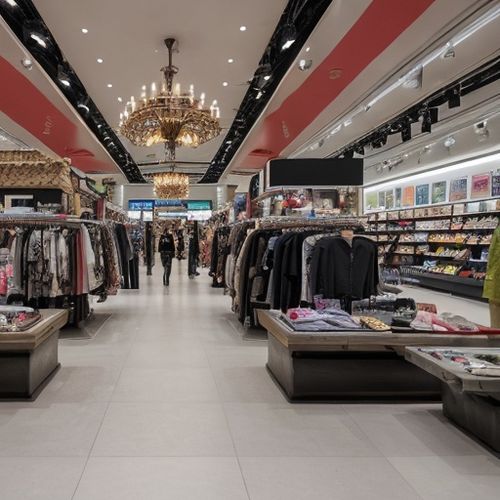
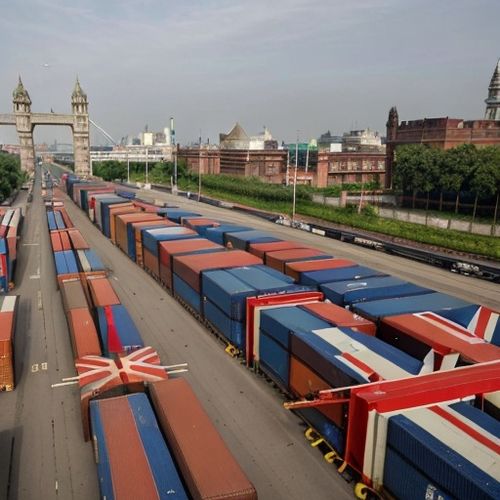
Moscow's upscale shopping districts tell the story better than any economic report. Storefronts that previously displayed logos of departed European fashion houses now feature handwritten signs in Cyrillic advertising "original products with documentation." The merchandise inside often arrives through labyrinthine routes involving third countries like Armenia, Kazakhstan, and Turkey—a modern-day Silk Road catering to Russian consumers starved for international brands.
The parallel import mechanism, officially approved by the Kremlin in June 2022, represents a radical departure from conventional trade policy. Rather than cracking down on gray market goods as most nations do, Russia has institutionalized the practice. Customs officials now turn a blind eye to shipments of Apple products from Dubai, French cosmetics from Kyrgyzstan, or German auto parts from Belarus—provided the importers pay the requisite tariffs.
This policy shift has birthed an entire class of new entrepreneurs. Former travel agents, IT specialists, and even university professors have reinvented themselves as parallel import specialists. They operate in legal limbo, exploiting loopholes in international trade law to source products through intermediary nations. The most successful have established networks spanning a dozen countries, employing teams to handle logistics, customs clearance, and distribution.
Consumer electronics represent the most visible segment of this shadow economy. Official Apple stores may have vanished, but iPhones and MacBooks remain widely available—often at prices 30-50% higher than before the sanctions. The devices typically arrive with Kazakh or Armenian warranty cards, and while some function perfectly, others exhibit quirks like keyboards with Cyrillic legends or region-locked features.
Luxury goods follow even more circuitous paths. A Gucci handbag purchased in Moscow today might have begun its journey in Italy, been shipped to a Dubai free trade zone, then transported to Armenia before crossing into Russia. Each leg of the journey adds to the final price, putting designer items out of reach for all but the wealthiest consumers. Yet demand persists, driven by a deep-seated cultural affinity for Western luxury brands among Russia's elite.
The automotive sector presents perhaps the most striking case study. European car manufacturers officially halted shipments to Russia, yet Mercedes and BMW vehicles continue to appear at dealerships—now bearing serial numbers indicating manufacture for "the Eurasian market." Industry insiders whisper about entire factories in Belarus being repurposed to "reconfigure" vehicles for Russian buyers, complete with altered VIN numbers and adapted electronics.
Pharmaceuticals have become another critical gray market category. While medicines technically fall outside the parallel import program, supply chain disruptions have forced hospitals and pharmacies to seek alternative sources. Insulin from Denmark, cancer drugs from Switzerland, and ADHD medications from the United States now frequently enter through back channels, sometimes with expiration dates dangerously close to expiry.
This new economic reality has created bizarre market distortions. In Yekaterinburg, shoppers can choose between "official" Samsung phones (imported via Armenia at triple the price) and nearly identical "unofficial" models smuggled across the Kazakh border. The former come with local warranties but lack certain features; the latter might have Ukrainian-language settings that can't be changed. Consumers must navigate this maze of compromises with little reliable information.
The Russian government portrays parallel imports as a temporary measure, but economists see signs of institutionalization. Customs procedures have been streamlined for gray market goods, and state-controlled banks now offer specialized financing for parallel importers. Perhaps most tellingly, government procurement notices increasingly specify "Eurasian economic union versions" of technology products—a euphemism for gray market items.
This system hasn't developed without consequences. Intellectual property rights have effectively been suspended, with global brands powerless to prevent unauthorized distribution of their products. The legal ambiguity creates risks for consumers—warranties often prove unenforceable, and counterfeit goods increasingly mix with genuine articles in the supply chain.
As the parallel import economy enters its third year, questions arise about its sustainability. The initial inventory of pre-sanction goods has long been exhausted, and maintaining supply chains through multiple intermediaries proves costly. Some analysts predict the system will gradually be replaced by increased domestic production and trade with China. Others believe Russia's consumer economy may remain bifurcated—a formal sector for basic necessities and a gray market for Western luxuries—for years to come.
Walking through Moscow's retail districts today offers a glimpse into this strange new normal. The storefronts still gleam, the products still bear familiar logos, but the entire system operates on fundamentally different principles. Russia's experiment with legalized gray markets may represent the most unconventional economic adaptation to sanctions in modern history—a case study in how global trade rules can be rewritten overnight when geopolitical winds shift.
By Sophia Lewis/Apr 6, 2025

By Emily Johnson/Apr 6, 2025
By Noah Bell/Apr 6, 2025
By Victoria Gonzalez/Apr 6, 2025
By George Bailey/Apr 6, 2025

By Michael Brown/Apr 6, 2025
By Samuel Cooper/Apr 6, 2025
By Sophia Lewis/Apr 6, 2025
By Benjamin Evans/Apr 6, 2025

By Samuel Cooper/Apr 6, 2025

By Lily Simpson/Apr 6, 2025
By Christopher Harris/Apr 6, 2025
By Megan Clark/Apr 6, 2025
By Natalie Campbell/Apr 6, 2025
By Noah Bell/Apr 6, 2025
By Olivia Reed/Apr 6, 2025
By Sarah Davis/Apr 6, 2025
By James Moore/Apr 6, 2025
By Benjamin Evans/Apr 6, 2025
By Benjamin Evans/Apr 6, 2025