The American dream has long been associated with white picket fences, two-car garages, and sprawling backyards. But in recent years, a new element has quietly emerged as a staple of suburban life: the self-storage facility. What began as a utilitarian solution for urban dwellers has blossomed into a full-blown suburban phenomenon, with storage unit franchises popping up like dandelions across the nation's strip malls and highway exits.
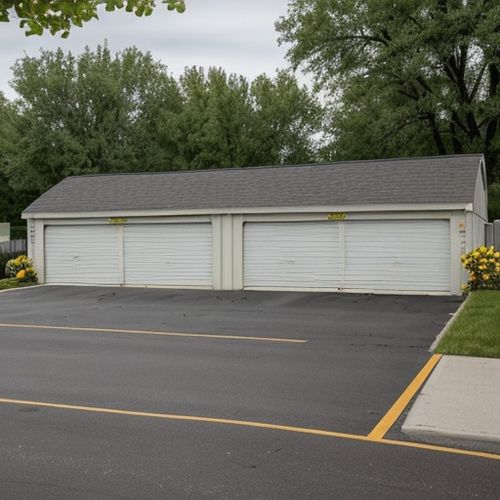
Drive through any middle-class suburb today, and you'll notice the telltale signs - rows of identical garage-style doors painted in cheerful hues, surrounded by chain-link fencing and bathed in the glow of LED security lights. These unassuming structures represent one of the fastest-growing sectors in commercial real estate, with industry revenue ballooning from $22 billion in 2012 to over $39 billion in 2021. The pandemic only accelerated this trend, as remote work and nesting behaviors created both the need for more space and the means to pay for it.
The psychology behind America's storage obsession reveals much about our changing relationship with material possessions. Sociologists point to several converging factors: the decline of multigenerational households, the rise of consumer culture, and perhaps most significantly, the suburbanization of millennials. As this generation settles down and starts families, they're bringing urban accumulation habits to spaces never designed to accommodate them. The average American home has nearly tripled in size since the 1950s, yet somehow, we've managed to fill every closet, garage, and attic to capacity.
Storage companies have become remarkably sophisticated in their marketing, targeting specific life transitions with surgical precision. Newlyweds receive coupons when they register at Bed Bath & Beyond. Divorcees find brochures slipped under their apartment doors. Retirees see targeted ads offering "downsizing solutions." The industry understands that Americans don't just need space - they need emotional permission to hold onto things they might not use, but can't quite bear to part with.
What makes the suburban storage boom particularly fascinating is its resistance to economic downturns. While other commercial real estate sectors faltered during the 2008 financial crisis, storage facilities proved remarkably resilient. Industry analysts coined the term "recession-resistant" to describe how storage rentals actually increased as people lost homes and needed temporary solutions. This stability has attracted institutional investors, with private equity firms now owning approximately 20% of all storage facilities nationwide.
The business model itself is deceptively simple. Unlike apartments or offices, storage units require minimal maintenance. No plumbing, no kitchen appliances, just four walls and a roll-up door. Yet the profit margins can exceed 40%, thanks to clever pricing strategies that exploit human psychology. Many facilities offer steep introductory discounts, knowing most customers will stay beyond the promotional period. Others use demand-based pricing algorithms similar to airlines and hotels, adjusting rates in real time based on occupancy.
Local governments have taken notice of this quiet revolution in their communities. Zoning boards report increasing numbers of storage facility applications, often sparking heated debates. Proponents argue they generate steady tax revenue with minimal strain on municipal services. Opponents counter that they represent poor land use, contributing nothing to community character or walkability. Some towns have begun implementing moratoriums on new storage development, while others actively court operators as part of economic development strategies.
Behind the dry statistics and zoning battles lies a deeper cultural story. The storage industry's success hinges on our collective inability to let go - of childhood memorabilia, of inherited furniture, of sports equipment for hobbies we'll never take up again. In an age of Marie Kondo and minimalist aesthetics, our storage units have become the dirty secret of American consumerism, the places where we stash the evidence of our accumulation without having to confront it daily.
As the industry matures, operators are experimenting with new formats to stay competitive. Climate-controlled wine storage, RV and boat parking, and even "valet storage" services that pick up and deliver items on demand are expanding the traditional model. Some facilities now offer workspace rentals, creating hybrid environments where customers can sort through their stored items without taking them home. The most innovative operators are incorporating technology like app-based access and smart inventory systems.
The future of suburban storage appears bright, though not without challenges. Generational attitudes toward ownership may shift as younger consumers embrace sharing economies. Urban planners continue to push for higher-density, mixed-use developments that leave little room for sprawling storage campuses. And there's always the possibility that Americans might suddenly decide they actually need less stuff. But for now, in suburbs across the country, those brightly colored storage facilities keep multiplying - silent monuments to our complicated relationship with the things we own.

By Sophia Lewis/Apr 6, 2025

By Emily Johnson/Apr 6, 2025

By Noah Bell/Apr 6, 2025
By Victoria Gonzalez/Apr 6, 2025
By George Bailey/Apr 6, 2025

By Michael Brown/Apr 6, 2025

By Samuel Cooper/Apr 6, 2025

By Sophia Lewis/Apr 6, 2025

By Benjamin Evans/Apr 6, 2025

By Samuel Cooper/Apr 6, 2025
By Lily Simpson/Apr 6, 2025

By Christopher Harris/Apr 6, 2025

By Megan Clark/Apr 6, 2025
By Natalie Campbell/Apr 6, 2025
By Noah Bell/Apr 6, 2025

By Olivia Reed/Apr 6, 2025
By Sarah Davis/Apr 6, 2025

By James Moore/Apr 6, 2025

By Benjamin Evans/Apr 6, 2025

By Benjamin Evans/Apr 6, 2025